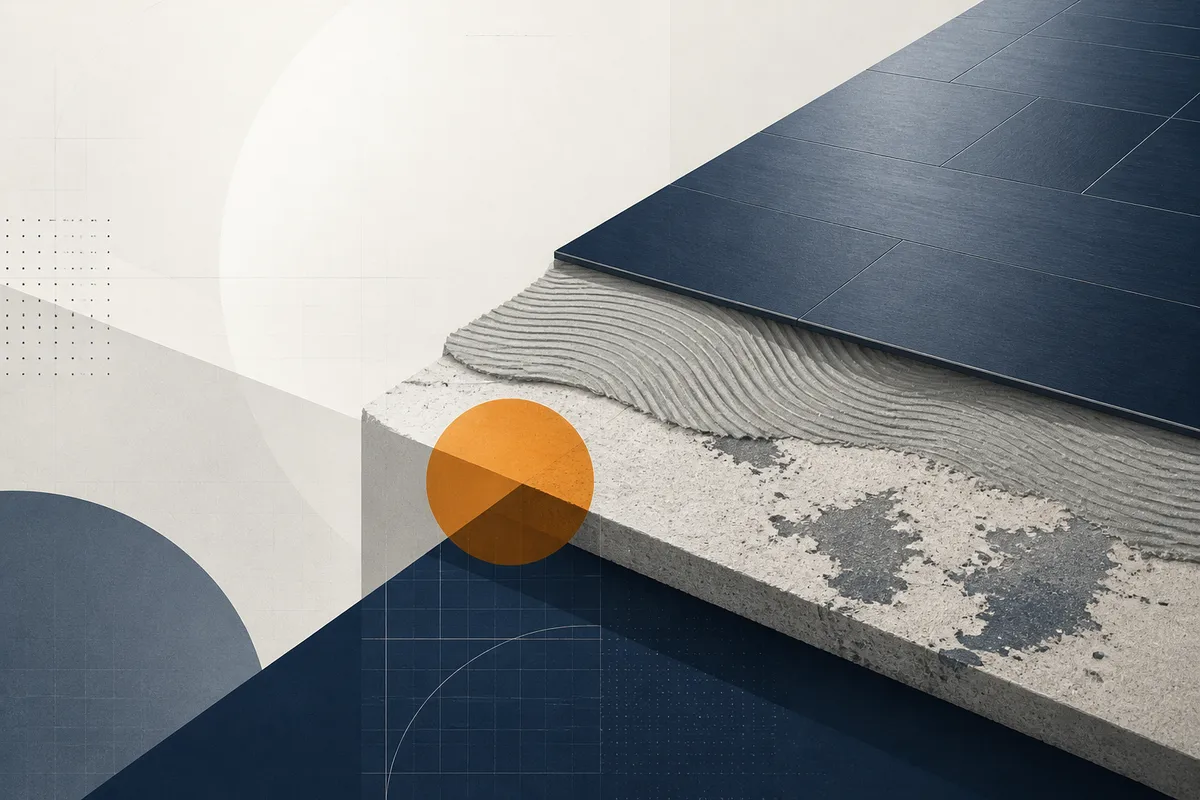
Successfully Installing New Flooring Over Asbestos Mastic Residue
Most property owners assume that once an abatement team leaves, the concrete slab is ready for immediate thin-set or glue. In reality, the "ghost" of the old adhesive—the black staining known as cutback mastic—is a material that many materials will not bond to effectively (https://www.houzz.com/discussions/3096833/painting-floor-if-black-mastic-remains-after-asbestos-tile-removed). If you apply a standard water-based adhesive directly over these stains, the residue can prevent a proper cure, causing luxury vinyl plank (LVP) or tile to shift and buckle.
This guide outlines the technical requirements for treating a concrete subfloor after the bulk of the hazardous material is gone. Whether you are managing a commercial build-out in Matthews or a residential basement renovation, the goal is to create a compatible surface that satisfies both safety standards and flooring requirements.
Why Standard Subfloor Prep Often Fails
Applying new finishes over old residue is not a matter of cleanliness, but of chemistry. Even when the surface feels smooth, the components of the original mastic are still present within the top few millimeters of the concrete.
- Modern eco-friendly adhesives often react poorly with petroleum-based legacy products, preventing a full cure (https://www.houzz.com/discussions/3096833/painting-floor-if-black-mastic-remains-after-asbestos-tile-removed).
- High-moisture environments can cause old mastic to interfere with the new underlayment, as nothing will effectively stick to the residue (https://www.houzz.com/discussions/3096833/painting-floor-if-black-mastic-remains-after-asbestos-tile-removed).
- Self-leveling compounds often require a porous surface to "bite" into, which mastic-clogged pores cannot provide.
- Imperfections or ridges in the remaining residue will telegraph through thin resilient flooring like LVP or sheet vinyl.
The Post-Abatement Subfloor Playbook
1Confirm the Cleanliness Standard
Before any new material is laid, the slab must be inspected to ensure it meets safety protocols. The subfloor should be clean, dry, and free of old adhesive or debris before applying any underlayment (https://www.facebook.com/groups/homegardendiy/posts/1832570264015273/). The surface should be free of any friable material or loose flakes before moving to the sealing phase.
2Decontaminate and Degrease
Even after professional floor tile mastic removal, a microscopic layer of residue may remain. Using a pH-neutral degreaser helps lift surface contaminants without damaging the concrete structure. Avoid high-acid washes, as these can drive contaminants deeper into the slab or interfere with the bond of future leveling agents.
3Evaluate the Bond Requirement
If you are installing a floating floor, such as a click-lock laminate, the requirements are less bridge-dependent than for glue-down products. However, if the project calls for permanent tile or hardwood, the slab must be prepared to accept the new bond. Technical experts suggest that the old black adhesive should be left alone and considered to contain asbestos until assayed, and it will not break down on its own (http://www.hardwoodflooringtalk.com/forum/floating-glue-down-over-asbestos-t11978.html).
4Apply a Mastic-Compatible Encapsulant
Encapsulation involves rolling on a specialized primer designed to create a barrier between the old mastic and the new flooring. Intact mastic may not require removal, but planned flooring work can require regulated methods to prevent dust (https://www.remtechenvironmental.com/blog/asbestos-floor-tile-mastic-removal/). This is a common path for residential renovations in the Matthews service area where slab-on-grade moisture is a concern.
5Mechanical Profiling
In commercial settings where high-performance coatings are required, contractors may use diamond grinding to remove the top layer of concrete. This process must only be performed after a negative asbestos testing and inspection report is issued, as mechanical scraping or sanding of suspect mastic can send hazardous fibers into the air (https://madisonasbestos.com/contractors/mold-and-asbestos-guide-for-flooring-contractors/).
The Mechanism of Adhesive Migration
The primary technical challenge with flooring over asbestos mastic residue is the potential for the old adhesive to react with new installations. Old cutback mastics were formulated to remain stable over decades. When a new floor is placed on top without a barrier, the residue can interfere with the new bonding agents.
This results in a failure of the new adhesive to grip the substrate. The only way to ensure a successful long-term installation is to provide a clean, dry surface free of old adhesive (https://www.facebook.com/groups/homegardendiy/posts/1832570264015273/). A slab that looks clean to the naked eye can still fail if the pores remain saturated with old oils. Effective preparation focuses on neutralizing these residues or sealing them permanently beneath a non-reactive membrane.
How Charlotte Asbestos Removal Helps
Proper subfloor preparation starts during the abatement phase. A standard scope of work involves the controlled removal of tiles and the bulk of the underlying adhesive using methods that avoid sending fibers into the air (https://madisonasbestos.com/contractors/mold-and-asbestos-guide-for-flooring-contractors/). Once the hazardous material is cleared and the area passes air clearance, the focus shifts to the residue. Operators typically provide a slab that is prepared for the next phase, which allows flooring contractors to begin the encapsulation or leveling process. For projects in the Charlotte region, having a clear plan for the transition from abatement to installation prevents delays and ensures that new flooring is installed on a clean, dry subfloor (https://www.facebook.com/groups/homegardendiy/posts/1832570264015273/).
Frequently asked questions
Can I just put a moisture barrier over the mastic residue?
A moisture barrier or poly film is often used for floating floors, as there is no chemical bond required between the floor and the slab. However, if you are gluing down any material, the subfloor must be free of old adhesive to ensure the new material sticks (https://www.houzz.com/discussions/3096833/painting-floor-if-black-mastic-remains-after-asbestos-tile-removed).
Does the black color always mean there is asbestos?
While black "cutback" adhesive is a primary indicator of asbestos in older buildings, color alone is not a diagnosis. Contractors should treat black mastic as suspect until it is tested (https://madisonasbestos.com/contractors/mold-and-asbestos-guide-for-flooring-contractors/). The only way to confirm the presence of asbestos is through laboratory analysis.
What happens if the new adhesive reacts with the old mastic?
The most common result is a bond failure. Because nothing effectively sticks to the old residue, the new adhesive may fail to cure or grip the concrete (https://www.houzz.com/discussions/3096833/painting-floor-if-black-mastic-remains-after-asbestos-tile-removed). This can cause the new flooring to shift or delaminate from the subfloor.
Is diamond grinding better than encapsulation?
Diamond grinding provides a porous bond for high-end coatings, but it must be done carefully. Any mechanical scraping or sanding of asbestos-containing mastic must be avoided to prevent sending fibers into the air (https://madisonasbestos.com/contractors/mold-and-asbestos-guide-for-flooring-contractors/). In many residential projects, encapsulation is a safer alternative.
How do I know if the slab is ready for a new floor?
The slab is ready when it is clean, dry, and free of all old adhesive or debris (https://www.facebook.com/groups/homegardendiy/posts/1832570264015273/). You can perform a bond test by gluing a small piece of your new flooring to the slab and attempting to pry it up after 72 hours; if it pulls up easily because it failed to stick to the residue, further cleaning is required.
What happens when you get in touch: the situation is described, questions are asked to determine the specific needs of the project, and a clear scope and next step is provided — no obligation.