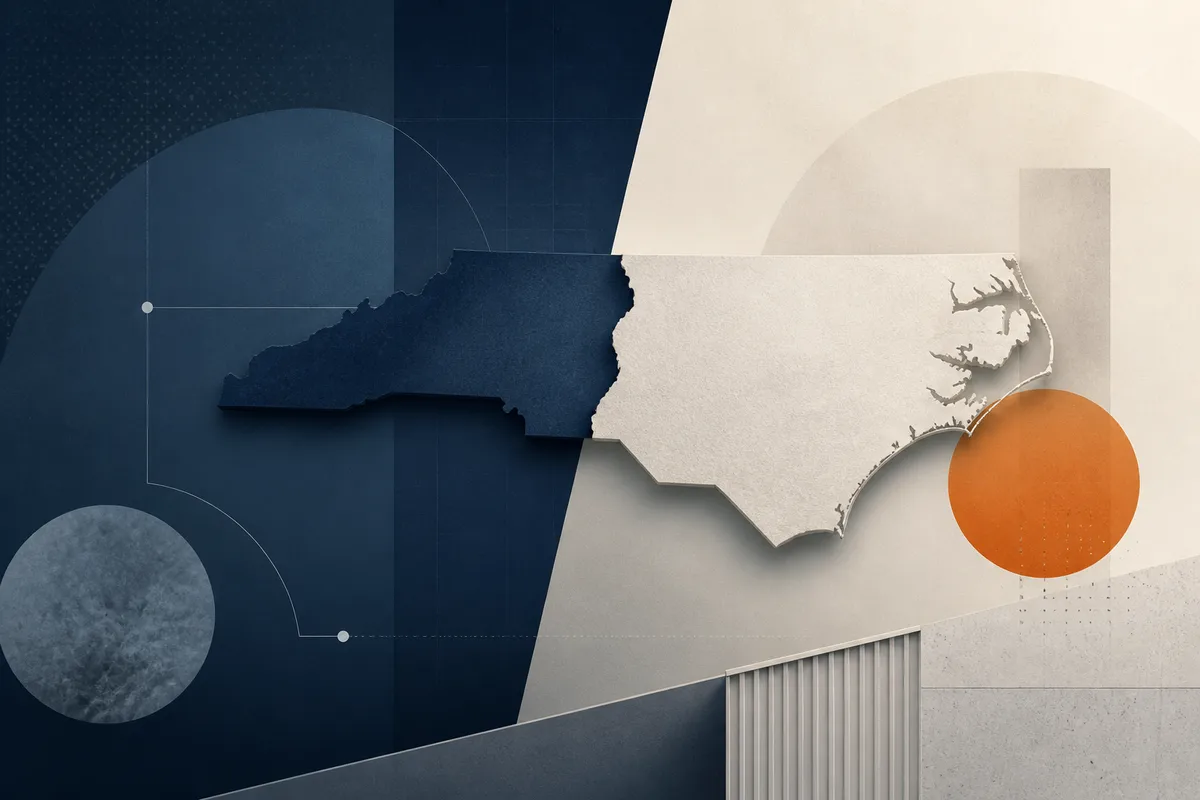
Navigating the Asbestos Regulatory Divide Between North and South Carolina
Property managers operating across the border corridor often assume that EPA standards create a uniform playing field for environmental remediation. This assumption is a liability. While the federal National Emission Standards for Hazardous Air Pollutants (NESHAP) provides a baseline, North Carolina and South Carolina have developed distinct administrative hurdles, notification windows, and licensing structures that can stall a renovation if not anticipated.
This guide clarifies the operational differences between the North Carolina Department of Health and Human Services (NC DHHS) and the South Carolina Department of Environmental Services (SCDES). It is designed for asset managers and owners in the Piedmont region who need to standardize compliance across a border-straddling portfolio.
Why Border-State Compliance Often Fails
Mistakes in interstate asbestos regulations usually stem from applying the "home state" rulebook to a neighboring jurisdiction.
- Notification periods in South Carolina (SCDES) involve strict oversight for regulated renovation and demolition activities des.sc.gov.
- North Carolina utilizes a combined Permit Application and Notification Form that triggers specific fee schedules based on the amount of the material being removed.
- Accreditation is not inherently reciprocal; an inspector licensed in Raleigh cannot legally sign off on a survey for a facility in Fort Mill without specific South Carolina credentials.
- Disposal requirements vary by landfill, and crossing state lines with friable waste requires meticulous waste shipment records to avoid hefty interstate transport fines.
The Interstate Asbestos Management Playbook
1Execute State-Specific Inspections
Before any demolition or renovation begins, a comprehensive asbestos testing and inspection must be performed by a professional licensed in the state where the property is located. North Carolina and South Carolina have different definitions for what constitutes a "thorough" inspection for residential vs. commercial structures. Ensure the inspector provides a report that meets the specific NC DHHS standards for the intended scope of work.
2Verify Reciprocal Licensing
Never assume a contractor’s crew is cleared for work across the border. While some firms hold dual-state licenses, the individual supervisors and workers must carry the correct badges for the site’s jurisdiction. In the Matthews service area, a project might be only minutes from the South Carolina line, but the regulatory wall is absolute.
3Account for Notification Lead Times
Both states generally require a 10-working-day notification for major abatement or demolition projects. However, the SCDES rules are particularly rigid regarding revisions to these schedules. In South Carolina, the Asbestos Section issues permits specifically for regulated renovation and demolition activities, and updates to the project schedule must be communicated to maintain compliance des.sc.gov.
4Manage Cross-Border Disposal Logistics
Transporting asbestos-containing waste across the state line is legal but requires a clear paper trail. You must confirm that the receiving landfill is permitted to accept the specific type of asbestos (friable vs. non-friable) and that the transporter provides a Waste Shipment Record (WSR). North Carolina regulators frequently audit these records to ensure material hasn't been "lost" during interstate transit.
The Technical Reality of Multi-State Portfolios
The most significant friction point for regional owners is the "Permit-to-Work" threshold. In North Carolina, any renovation in a public or commercial building that involves regulated asbestos-containing material requires a formal permit once specific state-defined volume thresholds are met dph.ncdhhs.gov.
South Carolina's Department of Environmental Services maintains its own oversight, where SCDES issues permits for regulated renovation and demolition activities to ensure public health protection des.sc.gov. The complexity doubles when managing older industrial sites in Gastonia or Rock Hill, where legacy pipe insulation and roofing materials often require different disposal streams depending on state-level hazardous waste definitions.
How Charlotte Asbestos Removal Helps
Managing a project near the state line requires a scope of work that accounts for two sets of administrative fees and two different sets of reporting forms. A standard engagement involves a detailed review of the building's age, its previous renovation history, and the specific requirements of the local landfill. Owners should expect a remediation plan that includes clear timelines for air monitoring, containment setup, and a final clearance report that satisfies the specific health department mandates of either Raleigh or Columbia. For inquiries regarding specific property requirements, contact (704) 327-3475 or visit https://charlotteasbestosremoval.com/ to begin the consultation process.
Frequently asked questions
Do I need an asbestos survey in Charlotte if the house was built after 1980?
Yes. Neither the EPA nor North Carolina law provides a "cutoff date" that exempts a building from inspection based on age. Even newer buildings may contain asbestos in floor mastics, roofing materials, or joint compounds, so a survey is required prior to any demolition or significant renovation.
Can I move asbestos waste from a South Carolina job site to a North Carolina landfill?
It is permissible only if the landfill is permitted to accept that specific category of waste and all interstate transport manifests are correctly filed. The waste must be double-bagged, labeled according to DOT and OSHA standards, and accompanied by a Waste Shipment Record as required by federal and state environmental regulations.
What is the difference between friable and non-friable asbestos in SC vs NC?
Both states follow the federal definition: friable asbestos can be crumbled by hand pressure when dry, posing a high inhalation risk. However, North Carolina specifically regulates "Category II" non-friable materials (like transite siding) more strictly during demolition because they are likely to become friable when crushed by heavy machinery.
How long does the asbestos permitting process take in the Charlotte area?
In both North Carolina and South Carolina, you should plan for a mandatory 10-working-day notification period before work begins. This period starts once the state agency receives the completed application and the required fees, and it cannot usually be shortened for non-emergency projects.
Are residential homeowners exempt from these rules in South Carolina?
South Carolina generally exempts owner-occupied, single-family residential dwellings from SCDES asbestos regulations during routine renovations. However, if the home is being demolished for a commercial development or if it is a multi-unit structure, the full suite of SCDES professional inspection and notification rules applies.
What happens when you get in touch: you describe the situation, we ask the few questions that actually change the answer, and you get a clear scope and next step — no obligation.